
Export Opportunities for Pharma Manufacturers via UAE Markets
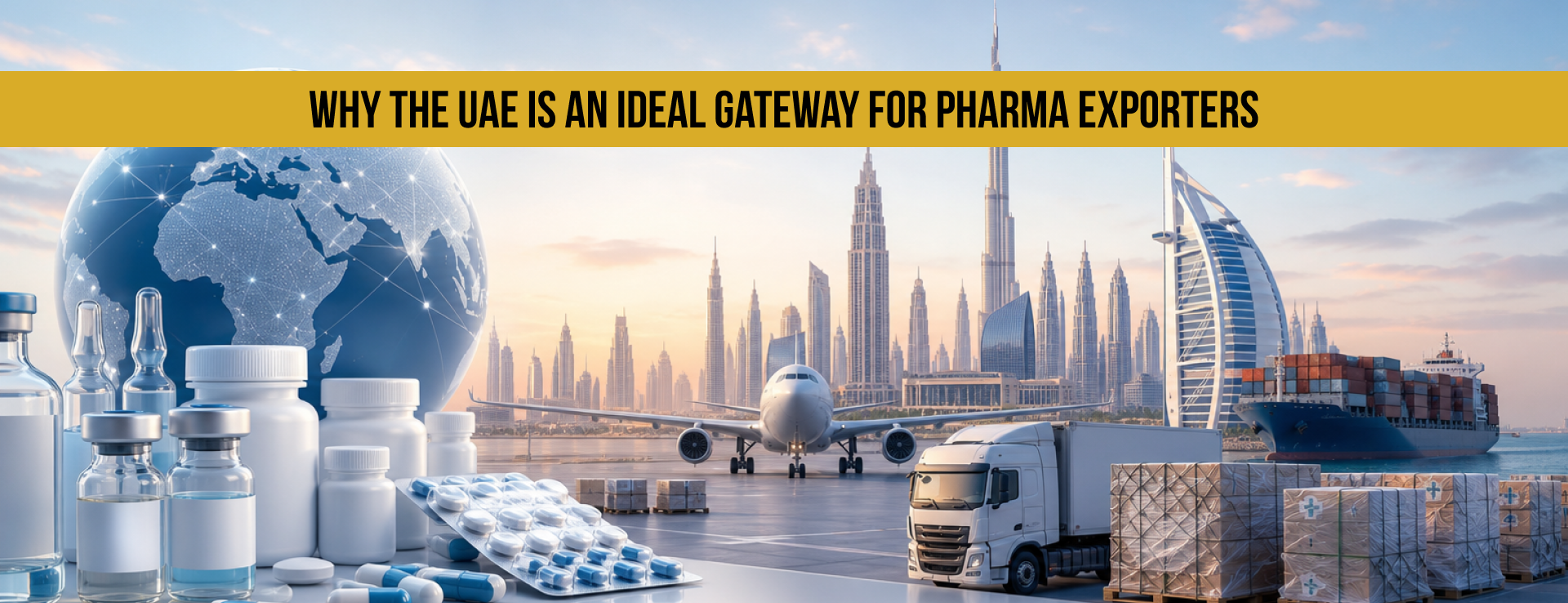
The UAE imports billions of dollars worth of pharmaceutical products every year. This might seem like a straightforward export opportunity but the real thing to understand is that selling into the UAE is never the end goal. The UAE is more than a pharmaceutical market - it's a gateway to the Middle East, Africa, and parts of Europe with one of the world’s most advanced logistic networks.
Understanding how to enter the UAE market strategically can unlock a lot more than a single customer base. It’s because the products entering the UAE often move onward to neighbouring markets, opening opportunities that would extend well beyond a single destination. This blog guides you through the biggest pharma export opportunities in the UAE, in demand products, and much more.
Overview of the UAE Pharmaceutical Market
The UAE pharmaceutical market sat somewhere around $4.4 to $5 billion in 2025, and it's projected to grow at roughly 6 to 7% a year through the early 2030s. While this growth will be steady, not explosive making it a more predictable market to plan around. The import dependency remains high despite a real push toward domestic manufacturing. More than 35 pharmaceutical factories now operate across the UAE, but local production still doesn't cover the range of what hospitals, clinics, and pharmacies need. Pharmaceutical products in UAE fall mostly under HS Chapter 30, with code 3004 covering packaged medicaments and 3002 covering vaccines, blood products, and other immunological items.
The demand for generic medicines is also high - there are over 6,000 generic products currently available in the UAE market, especially in the public health system, which keeps pushing that number up. Medical tourism adds another layer of demand, since Dubai in particular has positioned itself as a regional destination for advanced treatment, and that draws patients expecting the same standard of medicine available anywhere else in the world.
Export Opportunities for Pharma Manufacturers via UAE Markets
High Demand for Generic Medicines
Generic medicines continue to generate substantial Pharma Export Opportunities in UAE. This is because the cost-conscious healthcare systems across the UAE and the wider region continue to favor generic medicines. The adoption for this med has grown steadily as public health programs look to stretch budgets further without compromising treatment access. For manufacturers, this creates a real opening - not just into the UAE itself, but into the emerging markets it feeds through re-export, where price sensitivity runs even higher.
Specialty and Niche Pharmaceutical Products
Oncology products sit at the top of this category. It is driven by rising cancer rates and a healthcare system willing to import advanced treatments rather than wait for local production to catch up. Cardiology drugs and diabetes treatments follow closely, tied to the region's high chronic disease burden. Biologics round out the group, and they're also the most interesting opportunity here - complex to produce, harder to substitute with generics, and increasingly supported by regulatory reform aimed at speeding up approval for exactly these kinds of therapies.
Nutraceuticals and Wellness Products
Increasing health awareness across the UAE has generated a genuine appetite for preventive healthcare products. Supplements and vitamins move fast through retail pharmacy channels, helped along by a population that's comfortable spending on wellness products. This category carries lower regulatory friction than prescription pharma in most cases, which makes it a reasonable entry point for manufacturers who aren't ready to navigate the heavier registration requirements of specialty drugs yet.
Private Label Manufacturing Opportunities
UAE distributors increasingly want their own branded lines rather than reselling someone else's label, and that's opened up real contract manufacturing opportunities for exporters willing to work behind the scenes. White-label exports let a manufacturer supply volume without having to build brand recognition from scratch in a new market. It's a quieter way in, but for a lot of manufacturers, quieter is exactly what makes the economics work.
Re-export Opportunities Across GCC and Africa
Saudi Arabia, Oman, Kuwait, Bahrain, and Qatar all pull a share of their pharmaceutical supply through UAE intermediaries rather than direct imports, and East and North African markets also do the same. The UAE's role as a regional distribution hub means a single successful entry here can open doors across various other countries without a manufacturer having to register separately in each one right away. It may take longer to build, but it often delivers better long-term results than entering the market directly.
Regulatory Requirements Every Exporter Should Know
A successful market entry begins with regulatory compliance. The Ministry of Health and Prevention, known as MOHAP, oversees pharmaceutical registration and import approval in the UAE, and getting familiar with its process early saves a lot of time later.
Some of the key areas exporters should prepare for include:
-
Product registration with MOHAP
-
Valid Good Manufacturing Practice (GMP) certification
-
Complete product dossiers and technical documentation
-
Proper labeling that complies with UAE regulations
-
Import licensing through authorized local partners
-
Stability data and quality assurance documentation where required
The most common mistake exporters make is assuming their home-market registration will simply transfer over. But it won't. Treating UAE registration as its own process, with its own timeline, tends to save months of back-and-forth compared to assuming a shortcut exists.
How Trade Intelligence Can Improve Market Entry Success?
Trade intelligence shows shipment-level data, what's actually being imported, by whom, and how often - which is a real record of buying activity rather than a guesswork. For a manufacturer trying to export pharmaceuticals to the UAE, this provides a clear picture of active importers, their typical order volumes, and how consistently they've been buying.
That matters because market entry decisions made on assumptions tend to cost more than the research would have. Trade intelligence lets a manufacturer verify demand before investing in registration, identify which UAE pharma distributors are actively bringing in a given product category, and time market entry around real buying patterns instead of predictions. This is the difference between entering with a strategy and entering with predictions.
Wrapping Up
The UAE offers a lot more than just sales. It's a strategic gateway into GCC and African markets that would take years to reach separately. Getting there successfully depends on three things working together: solid regulatory preparation, the right distribution partners, and trade data that replaces guesswork with real data - this is exactly where a platform like EX-IM By The Dollar Business helps you.
If you're a manufacturer looking to find pharma buyers in Dubai, verify distributor activity, or time your entry around genuine demand rather than assumptions, book a demo with us to see how EX-IM can sharpen your next trade in the UAE market.
Frequently Asked Questions
1. Why is the UAE an Ideal Gateway for Pharma Exporters?
The UAE is an ideal gateway for pharma exporters because it’s more than just a domestic pharma market. It serves as a major distribution gateway to the GCC, Africa, and parts of Europe. Plus, its advanced logistics infrastructure, free trade zones, and strong connectivity make it an ideal base for regional expansion.
2. Which pharmaceutical products have the highest demand in the UAE?
Generic medicines, oncology drugs, diabetes treatments, cardiology products, biologics, vaccines, and wellness supplements have the highest demand in the UAE.
3. Do pharma products need registration before being sold in the UAE?
Yes they do need it! Pharmaceutical products must be registered with the UAE Ministry of Health and Prevention (MOHAP) before they can be imported and distributed. Exporters also need supporting documents such as GMP certificates, product dossiers, and compliant labeling.
4. How long does pharmaceutical product registration take in the UAE?
Registration timelines can vary depending on the product category, documentation quality, and regulatory review process. Therefore, exporters should start preparations early and ensure all required documents are complete to avoid delays.